
HD 85 Democratic Primary Concession Statement
May 12, 2026
The primary voters of House District 85 have made their choice, and I respect their decision. I congratulate Deborah K. Stiles on her election and wish her success in the days ahead — the issues of concern and opportunuty she carries into the fall and beyond are not the sole burden of any one candidate or officeholder. It is incumbent on all of us who call this majestic and magical corner of the world home to do our part for the betterment of all.
To everyone who supported this campaign: thank you.
You talked with your neighbors, and reminded me every day why this district is worth fighting for. The issues we raised — protecting our environment, job training for the 21st century, healthcare for all — do not end on Election Day in November. They belong to this community, and they deserve unwavering attention regardless of who represents us in Charleston.
Democracy depends not just on who wins, but also on what the defeated do the day after. I intend to stay engaged with the people and the place I love, and I hope every resident of our district — whatever their politics — will do the same. We are stronger when together we hold our representatives accountable for their words and actions on the campaign trail and in Charleston.
I will always remember this campaign as one of grace received and hope restored with every extended hand and welcoming smile.
HD 85 Democratic Primary Concession Statement
May 12, 2026
The primary voters of House District 85 have made their choice, and I respect their decision. I congratulate Deborah K. Stiles on her election and wish her success in the days ahead — the issues of concern and opportunuty she carries into the fall and beyond are not the sole burden of any one candidate or officeholder. It is incumbent on all of us who call this majestic and magical corner of the world home to do our part for the betterment of all.
To everyone who supported this campaign: thank you.
You talked with your neighbors, and reminded me every day why this district is worth fighting for. The issues we raised — protecting our environment, job training for the 21st century, healthcare for all — do not end on Election Day in November. They belong to this community, and they deserve unwavering attention regardless of who represents us in Charleston.
Democracy depends not just on who wins, but also on what the defeated do the day after. I intend to stay engaged with the people and the place I love, and I hope every resident of our district — whatever their politics — will do the same. We are stronger when together we hold our representatives accountable for their words and actions on the campaign trail and in Charleston.
I will always remember this campaign as one of grace received and hope restored with every extended hand and welcoming smile.
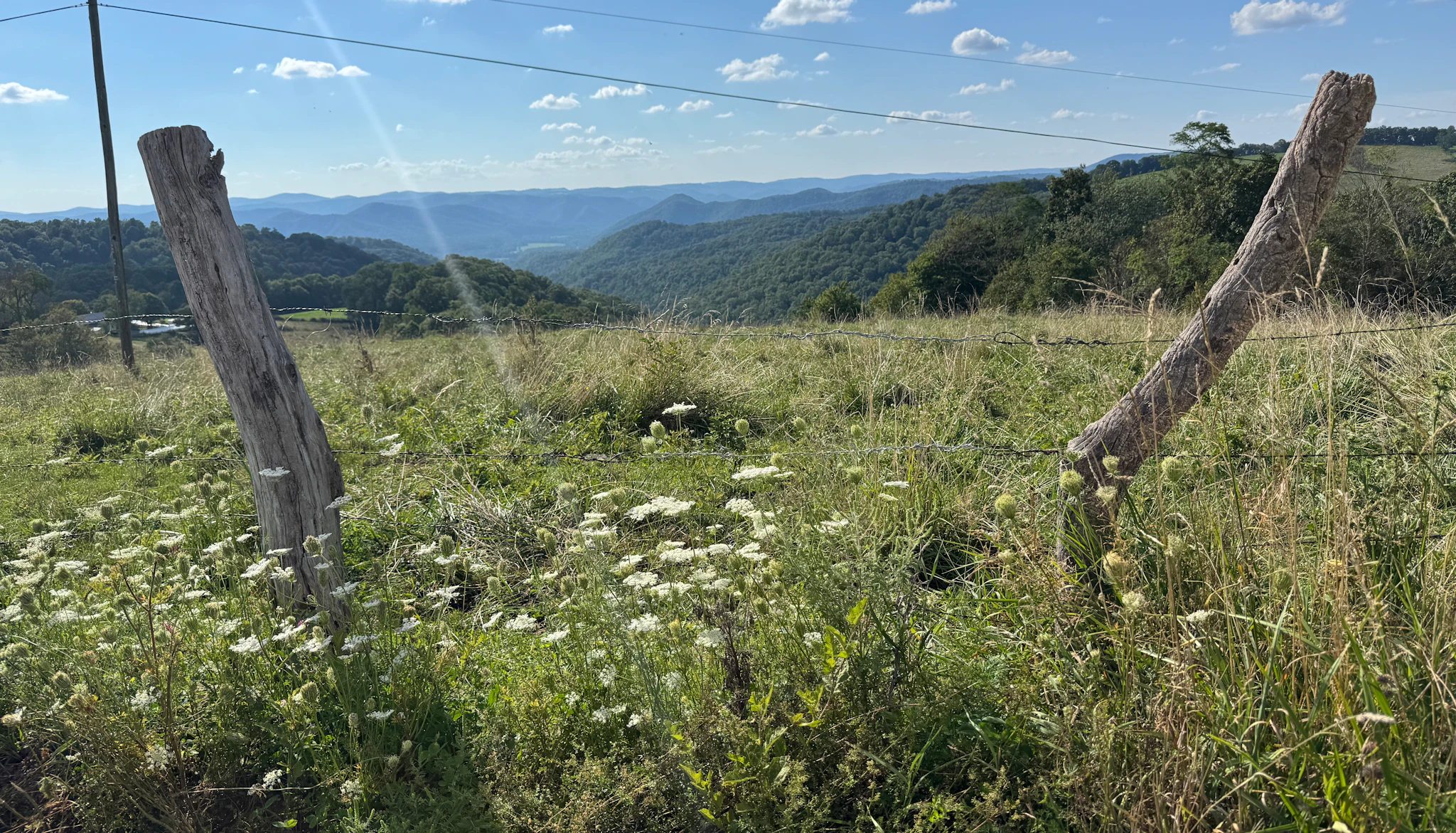
Through out the campaign, I will post prose that represents the hollers of Appalachia we know best in HD 85.
Saturday, March 28
The Murmur
There’s a murmur moving through these hills,
and it is not the wind.
The dogs know it first,
throwing their voices against the ridge line
like the mountain answered back wrong.
Even the road feels tighter underfoot,
like it’s bracing.
It showed up at the courthouse steps,
folding chairs biting into marble dust,
coffee thinned to the color of creek water in August.
Men arguing about SNAP
like hunger is a stain that spreads on its own.
Arguing about women’s health-
they’ve never sat beside a pregnant twelve year old
trying to memorize algebra
between doctor’s appointments.
Preaching about vaccines
like we didn’t once chase down the greatest medical miracle and call it polio cured.
Women with Aitken’s Bibles tucked deep in their purses,
pages like decorative dish towels with gold trim,
verses about loaves and fishes
pressed between lipstick and receipts.
I hope they read the red letters slow.
You can feel it in the creek before it floods.
Water pulls itself close.
Sycamores flash their pale underarms.
Cows settle heavy in the pasture.
Even the crows hold their caw
like they know sound carries.
They talk about three strikes for mercy
as if grace keeps score.
They talk about who deserves clean water
in a state where wells run poison.
They shake hands in Charleston
while foster kids age out
with no family
and no porch light waiting.
I know an elderly woman
who fills milk jugs from her neighbor’s hose
because a hospital stay
turned her water bill into a cliff.
Her hands tremble in the cold
but she thanks him with cookies.
My Jesus is the neighbor with the spigot,
boots unlaced,
waving her over.
Not the utility company
stacking fees like firewood.
I know a man who met Narcan eight times.
Eight sharp blue mornings.
Eight returns from the edge of the creek bank
where the mud sucks at your heels.
Now he stands in church basements
under humming fluorescent lights,
telling the shaking ones
their names still matter.
Breath is not a sin.
Coming back is not weakness.
It is resurrection with track marks.
I know a woman who once counted SNAP dollars
at the Dollar General
with her chin lifted high.
Now she counts heartbeats.
Scrubs crisp as frost,
nursing degree framed on a paneled wall
that used to hold eviction notices.
Help was not her ending.
It was her bridge.
I know a child who eats on weekends
because neighbors in her holler
do not let cupboards echo.
There is always a pot of beans on low.
Cornbread sweating in a cast iron skillet.
A knock that sounds casual
but carries salvation in foil pans.
There’s a line at the food pantry
curving soft as the Elk River bend.
Nobody in it looks like a headline.
They look like us.
Boots dirty.
Hair pinned up with pencils.
Disabled.
The working poor.
Breath fogging in chemical valley air
that smells faintly of metal and prosperity.
So before you tell me
who’s worthy of bread
or breath
or one more chance,
come sit at this table.
Hear the door slap shut.
Tell them no yourself.
Eye to eye
And see if your voice shakes.
-Jenny Keener
----------------------------------------------------------------------------------------------------------------------
Palm Sunday
For The Dead of West Virginia, Still Waiting for a Better Day
Our ancestors are sown into pocket graveyards
throughout these mountains, private plots
lucky to be mown monthly by some volunteer
from the Presbyterian church or an inmate
from the county jail. Their headstones lean
into the hillsides, and they wait patiently,
bony wrists crossed, for the new body
they were promised from the pulpit
as they sat aching on bare wood pews
after six-day work weeks felling and barking
timber, or killing and cooking chickens, or wielding
a pick and shovel in a four-foot seam
half-a-mile inside a mountain. This isn’t to say
they didn’t know love and joy, that they didn’t
revel in pleasure and play. They held their children
in their laps, and sang loud and out of tune, and fought
and laughed, of course, because that is the unkillable kernel
at the heart of being human. But know this: they never knew
any work that didn’t hurt, and they only ever worked
because they had to, because there had to be a better life
beyond this one. But there they lie, still moldering, still
waiting, and maybe beginning to believe they were sold
a bill of goods, and this hole is the only home they’ll ever know,
from here on out, forever and ever, Amen.
-Doug Van Gundy, Elkins WV
------------------------------------------------------------------------------------------------------------
sign up to
Get Involved
